
Book Appointment Now

Fracture & Injury Care
A fracture or a ligament injury rarely arrives at a convenient time. What matters in the first few days is an accurate assessment — whether the bone is broken, whether the joint is stable, and what the right treatment is for your age, your work and your sport. Brain & Bone offers fracture and injury care in Ghatkopar with same-week assessment, plaster and splint application, and structured follow-up until you are back on your feet.

OVERVIEW
Fracture and injury care built around getting you moving again.
Injury care begins with the mechanism — how the injury happened, where the force went, and what the limb could and could not do immediately afterwards. That history, combined with examination and a targeted X-ray, usually establishes whether you are dealing with a fracture, a ligament sprain, a tendon injury or a dislocation. Each needs a different plan, and treating one as another is where recovery goes wrong.
Most fractures and soft-tissue injuries heal without surgery. Some need fixation, and a few need it urgently. The consultation tells you which group you are in, what the expected timeline is, and what you should and should not do while it heals. If your injury sits alongside an ongoing joint problem, it is worth reading about our orthopaedic consultation and joint care service as well. If you are comparing options, the NHS guidance on sprains and strains is a useful independent reference.
WHAT WE TREAT
Six injuries we treat, and what to expect from each.
Fractures, sprains, tendon injuries and dislocations are all seen in the same clinic. You do not need to know which one you have before you book.
01
Fractures
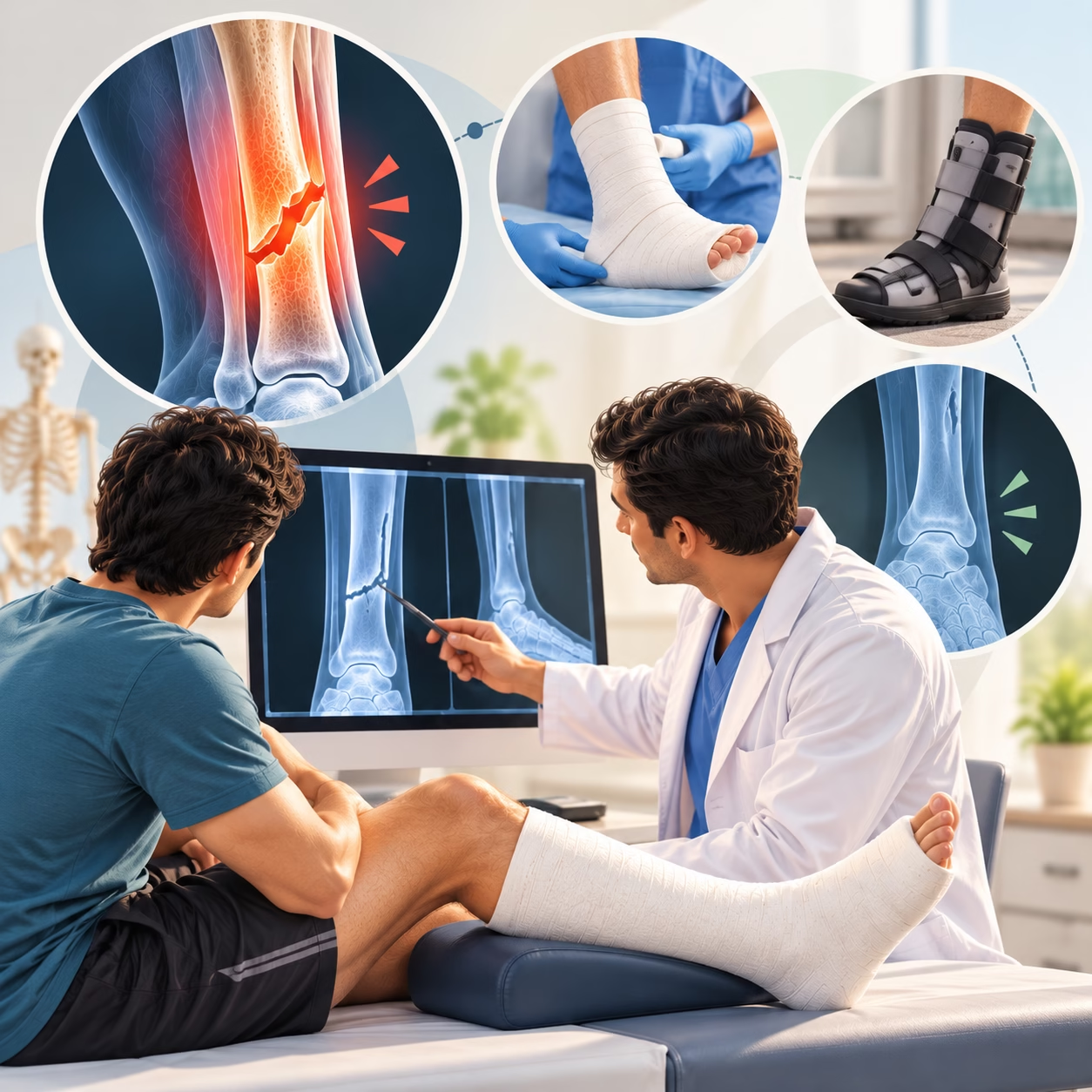
Fracture Assessment & Management
What it is
A fracture is a break or crack in a bone, and it does not always look dramatic. Some fractures cause obvious deformity and severe pain; others produce a dull ache that only worsens on movement. The distinction matters because a fracture that is not identified can heal in the wrong position, and a fracture that is over-treated can mean weeks of unnecessary immobilisation.
What we assess
Pain, swelling and bruising around a bone; inability to bear weight or use the limb; deformity or an unusual angle; tenderness directly over the bone; and fractures seen on X-ray in the wrist, ankle, hip, shoulder, collarbone, ribs and small bones of the hand and foot.
What to expect
A clinical examination followed by X-rays in the views needed to characterise the break. Most fractures are treated with a cast, splint or boot and a clear weight-bearing instruction. Fractures that are displaced, unstable or involve a joint are discussed for fixation, and you are told why.
Sprains & Ligament Injuries
What it is
A sprain is a stretch or tear of a ligament — the tough band that holds a joint together. The ankle is the commonest site, followed by the knee and the wrist. Most sprains settle with protection and rehabilitation, but a complete tear or a joint that keeps giving way needs a proper assessment rather than another round of rest and hope. Ligament injuries are a common reason people search for fracture and injury care in Ghatkopar, and they are assessed in the same clinic.
What we assess
Ankle sprains that swell immediately or bruise heavily; knee injuries with swelling within hours, a feeling of instability, or a pop at the time of injury; wrist and thumb ligament injuries; and recurrent sprains of the same joint.
What to expect
Examination of the joint for stability and specific ligament tenderness, with stress views or an MRI where a significant tear is suspected. Most sprains are managed with early protected movement and physiotherapy. Ligament reconstruction is considered for instability that persists despite rehab.
02
Sprains & Ligaments

03
Muscles & Tendons

Muscle & Tendon Injuries
What it is
Muscles and tendons fail in predictable ways. A sudden contraction can tear a muscle belly — the calf, the hamstring, the thigh. Repetitive load can inflame or degenerate a tendon — the Achilles, the patellar tendon, the rotator cuff. The first needs time and graded loading; the second needs a change in load, not just rest.
What we assess
Sudden sharp pain with a palpable defect or bruising; calf and hamstring strains; Achilles pain and swelling; patellar and quadriceps tendon problems; rotator cuff pain; and tendinopathy that has not settled with rest.
What to expect
Examination and, where needed, ultrasound to confirm the extent of a tear. Treatment is staged: relative rest, then progressive loading through physiotherapy. Complete ruptures of the Achilles or quadriceps tendon are discussed for repair, with the timeline explained.
Dislocations
What it is
A dislocation is a joint that has come out of place. The shoulder is the most frequent, but the elbow, kneecap, finger and ankle can all dislocate. The joint must be put back promptly and safely, and then assessed for the damage that caused it — because a first dislocation often reveals an underlying instability.
What we assess
Obvious deformity, inability to move the joint, severe pain and, in the shoulder, numbness or tingling down the arm. We also assess for associated fractures, nerve injury and, in recurrent cases, the structural cause of instability.
What to expect
Reduction of the joint under appropriate analgesia, followed by X-ray to confirm position and check for fractures. After reduction you are given a period of protection and a rehabilitation plan. Recurrent shoulder dislocation is assessed for stabilisation surgery.
04
Dislocations

05
Plaster & Splints
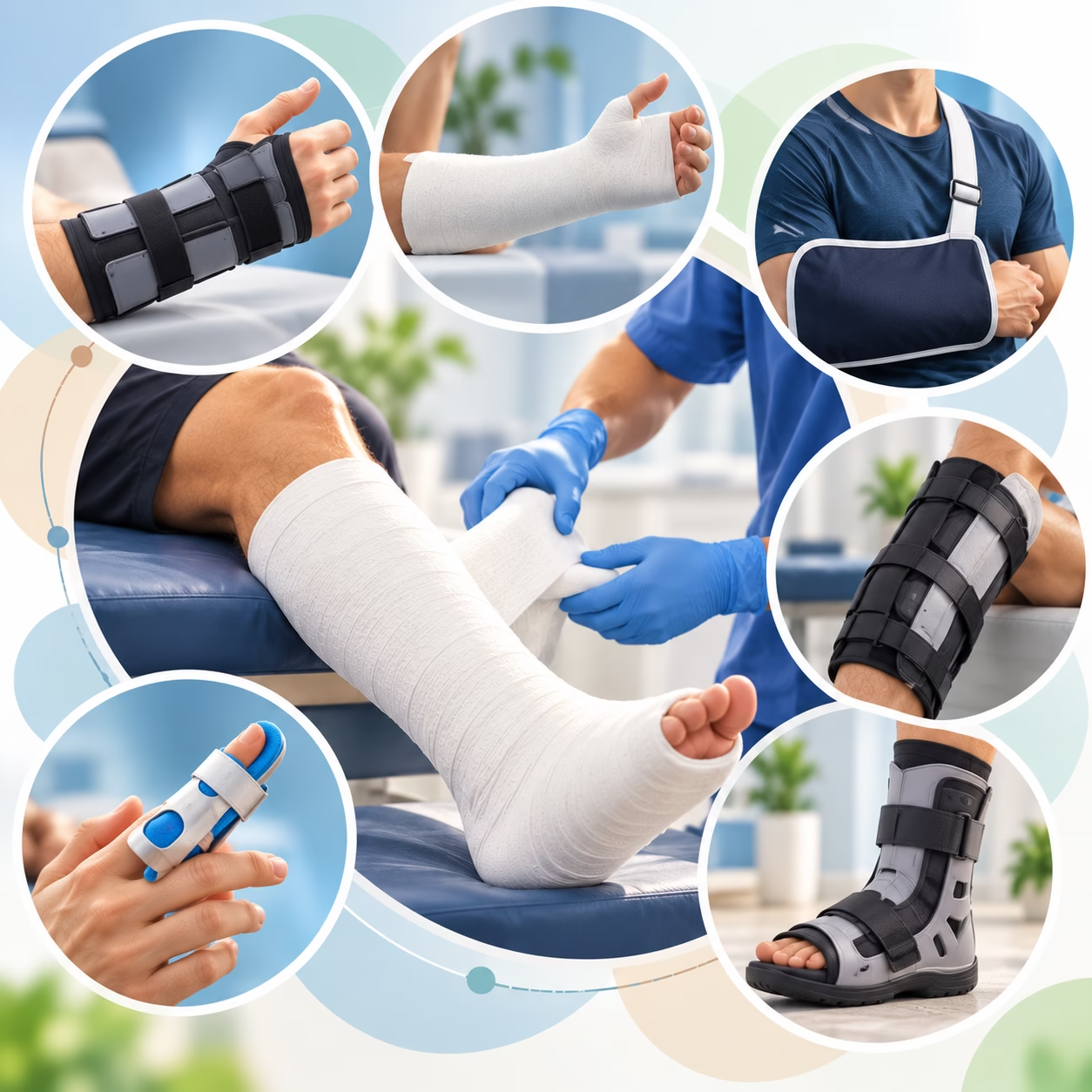
Plaster & Splint Application
What it is
A well-applied cast or splint does three things: it holds the bone or joint in the position it needs to heal in, it protects the soft tissues, and it allows you to use the rest of the limb. A poorly applied one causes pressure sores, stiffness and a fracture that drifts. The fit and the follow-up matter as much as the material.
What we assess
Fresh fractures that need immobilisation; sprains requiring support; post-operative protection; and splints for tendon injuries. We check swelling, skin condition, circulation and sensation before and after application.
What to expect
Application of a plaster cast, fibreglass cast or removable splint chosen for the injury and your daily needs. You are shown how to care for it, what warning signs to watch for, and when to return. Casts are reviewed at set intervals rather than left until they feel loose.
Fracture Follow-up
What it is
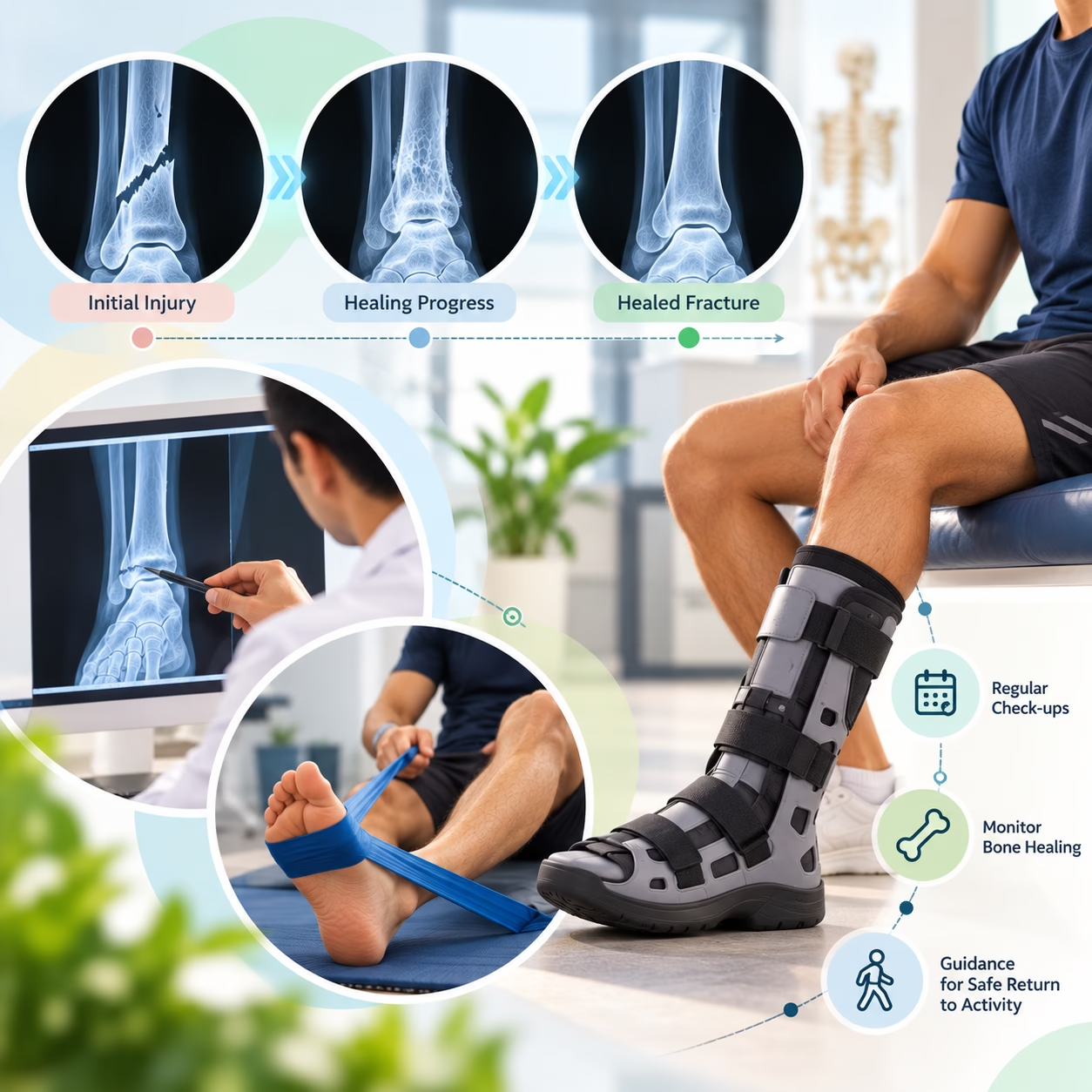
A fracture is not finished when the cast goes on. Healing is a process that needs to be checked — clinically and on X-ray — because a fracture can settle into a better or worse position during the first weeks. Follow-up is also when stiffness is prevented and the return to work or sport is planned.
What we assess
Fractures in cast or after fixation; healing progress on repeat X-rays; stiffness after immobilisation; pain that is out of proportion to the injury; and readiness to return to driving, work or sport.
What to expect
Review at intervals set by the fracture type, with repeat X-rays where needed. The cast may be changed or removed, physiotherapy started, and a graded return to activity agreed. If healing is delayed, the options are discussed openly rather than left to drift.
06
Fracture Follow-up
WHY BRAIN & BONE
Because you deserve to be treated as a person, not a diagnosis.
Specialist-Led Consultations
Every visit begins with the specialist who treats your condition.
Personalised Treatment
Plans built around your body, your mind and your life.
Evidence-Based Care
Treatment decisions grounded in clinical judgement, not guesswork.
Confidential Mental Healthcare
A private, respectful space for every conversation.
Clear Communication
Every option explained, in language you understand.
Continuity of Care
Follow-up and recovery support, not a single visit.
MEET YOUR SPECIALIST
Dr. Neeraj Mishra
Orthopaedic & Robotic Joint Replacement Surgeon

ABOUT YOUR DOCTOR
Treatment that starts with understanding the person.
I am an orthopaedic and robotic joint replacement surgeon with a focus on helping patients overcome pain, regain mobility and return to an active, independent life. Orthopaedic treatment, to me, is not simply about treating a bone or a joint — it is about restoring function and helping a person get back to the life they value.
My approach begins with understanding your symptoms, lifestyle and functional limitations, followed by a thorough clinical assessment. I explain the diagnosis and the treatment options clearly, so that you can make an informed decision about your own care. Where appropriate, I prefer to explore non-surgical options first.
With more than ten years of clinical experience, my work includes joint replacement and robotic-assisted joint replacement, with an emphasis on careful planning and appropriate patient selection.
FREQUENTLY ASKED QUESTIONS
Questions patients ask before booking.
Do I need to go to an emergency department for a fracture?
Go to an emergency department if there is heavy bleeding, an open wound over the bone, obvious deformity, loss of feeling in the limb, or you cannot bear weight at all. For a suspected fracture that is stable and not deformed, an urgent clinic appointment is usually appropriate. If you are unsure, call the clinic and we will advise you.
How quickly should a fracture be seen?
The same day or the next day where possible. Early assessment allows the fracture to be immobilised in the right position and reduces swelling-related problems. Delay is more tolerable for some stable injuries than others, which is why a phone call first is useful.
Will I need an X-ray?
Usually yes, if a fracture is suspected. X-rays are taken in the views needed to see the bone clearly — often two or three views rather than one. An X-ray is not needed for every sprain, and we will tell you when examination alone is enough.
How long will I be in a cast?
It depends on the bone and the person. A wrist fracture in a healthy adult is commonly immobilised for around six weeks; a lower limb fracture often takes longer. Healing is confirmed on X-ray rather than by the calendar, and children generally heal faster than adults.
Will I need surgery for my fracture?
Most fractures do not. Surgery is considered when the fracture is displaced, unstable, involves a joint surface, or when the bone will not hold its position in a cast. If surgery is recommended, you will be told what the operation involves and what the alternative would be.
When can I return to sport after an injury?
Return to sport is judged on strength, movement and confidence, not only on time. Most sprains allow a graded return within a few weeks with rehabilitation. Ligament injuries and fractures take longer, and contact sport needs a longer clearance than running or swimming.
What Our Patients Think
We are committed to improving the health of our patients and their feedback matters the most to us.


Wherever you’re starting from, we’re here to help you move forward.
Whether you are dealing with pain, recovering from an injury, navigating a difficult phase of life, or simply looking for someone to talk to — the first step is reaching out.