
Book Appointment Now
Diagnostics & X-Ray
Accurate diagnosis is the foundation of effective treatment. At Brain & Bone in Ghatkopar, our in-house digital X-ray facility ensures you get prompt, high-quality imaging without the need to travel between diagnostic centers and clinics. Whether assessing an acute fracture, monitoring joint wear, or checking spinal alignment, clear imaging guides our orthopaedic care. This page sets out our diagnostic imaging capabilities and what you can expect during your visit.
OVERVIEW
Seeing the problem clearly before planning the solution.
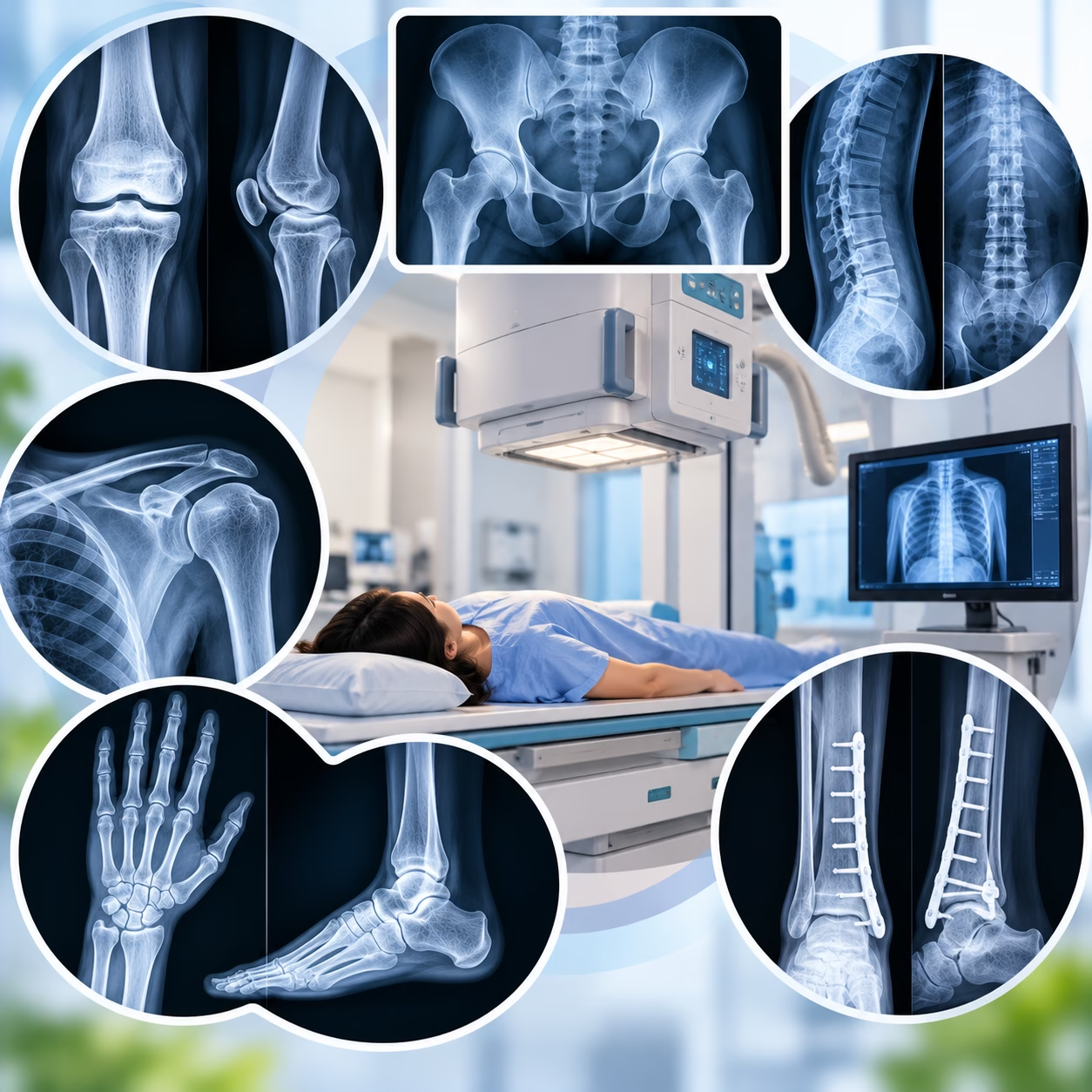
A digital X-ray provides immediate, detailed images of your bones and joints. It is the crucial first step in assessing fractures, arthritis severity, and spinal conditions. Having this facility in-house means your orthopaedic assessment and imaging happen under one roof, saving you time and reducing the discomfort of travelling between diagnostic centers.
If you are experiencing sudden pain or have suffered an injury, our orthopaedic consultation integrated with immediate X-ray capabilities ensures a complete and prompt diagnosis. For more independent reading on how X-rays work and what they entail, the Radiological Society of North America (RSNA) patient guide is a highly reliable resource.
WHAT WE IMAGE
Comprehensive digital diagnostics.
From immediate trauma imaging to precise joint assessments for surgical planning, our diagnostics cover all primary orthopaedic needs.
01
Digital X-Ray
Digital X-Ray
What it is
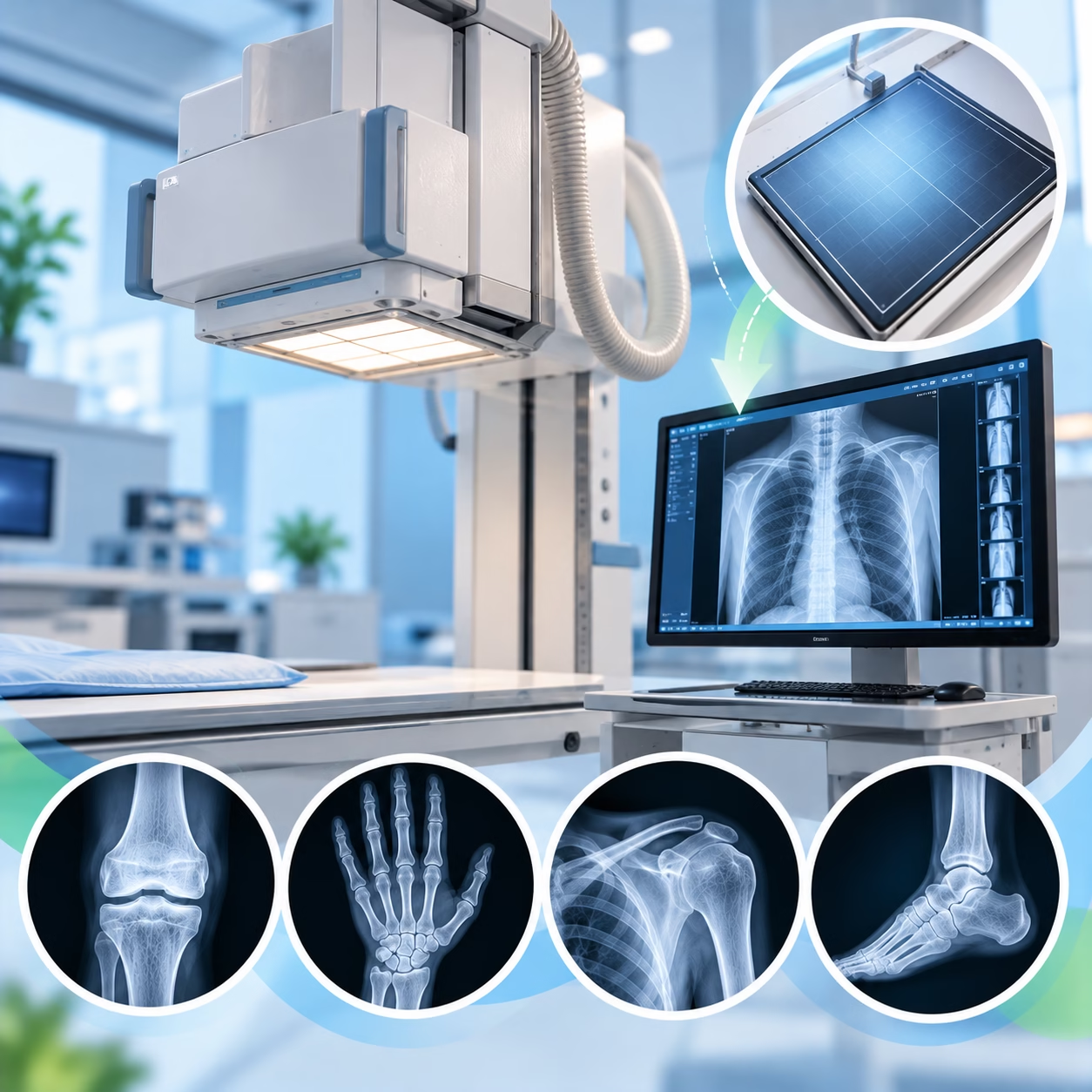
State-of-the-art digital radiography providing high-resolution images with significantly lower radiation exposure compared to traditional film X-rays. The images are instantly available on our clinic computers.
What we assess
Overall bone integrity, structural abnormalities, and alignment. It is the primary tool for investigating sudden bone pain, suspected fractures, and advanced joint diseases.
What to expect
A quick, painless procedure guided by our trained technician. Because the results are digital, they are reviewed with you on-screen by Dr. Neeraj Mishra within minutes of being taken.
Knee & Hip X-Ray
What it is
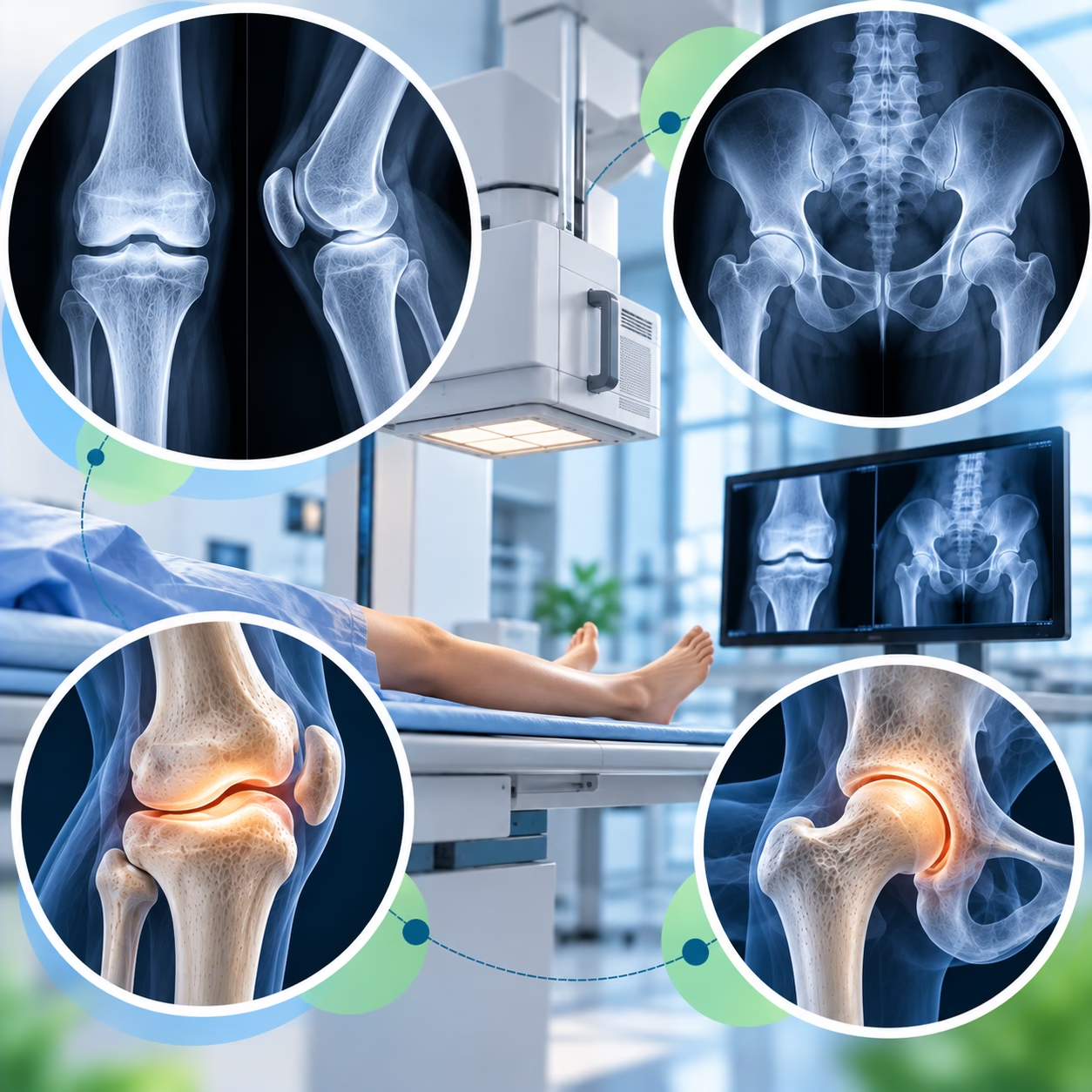
Specialized views of the major weight-bearing joints of the lower body. These often include standing (weight-bearing) views which provide a true picture of joint health under natural load.
What we assess
Loss of cartilage (joint space narrowing), the presence of bone spurs (osteophytes), signs of osteoarthritis or rheumatoid arthritis, and developmental issues like hip dysplasia.
What to expect
You may be asked to stand or bend your knees at a specific angle while the image is taken. This is standard protocol to evaluate the true degree of joint wear before planning treatments like joint replacement.
02
Knee & Hip
03
Spine Diagnostics
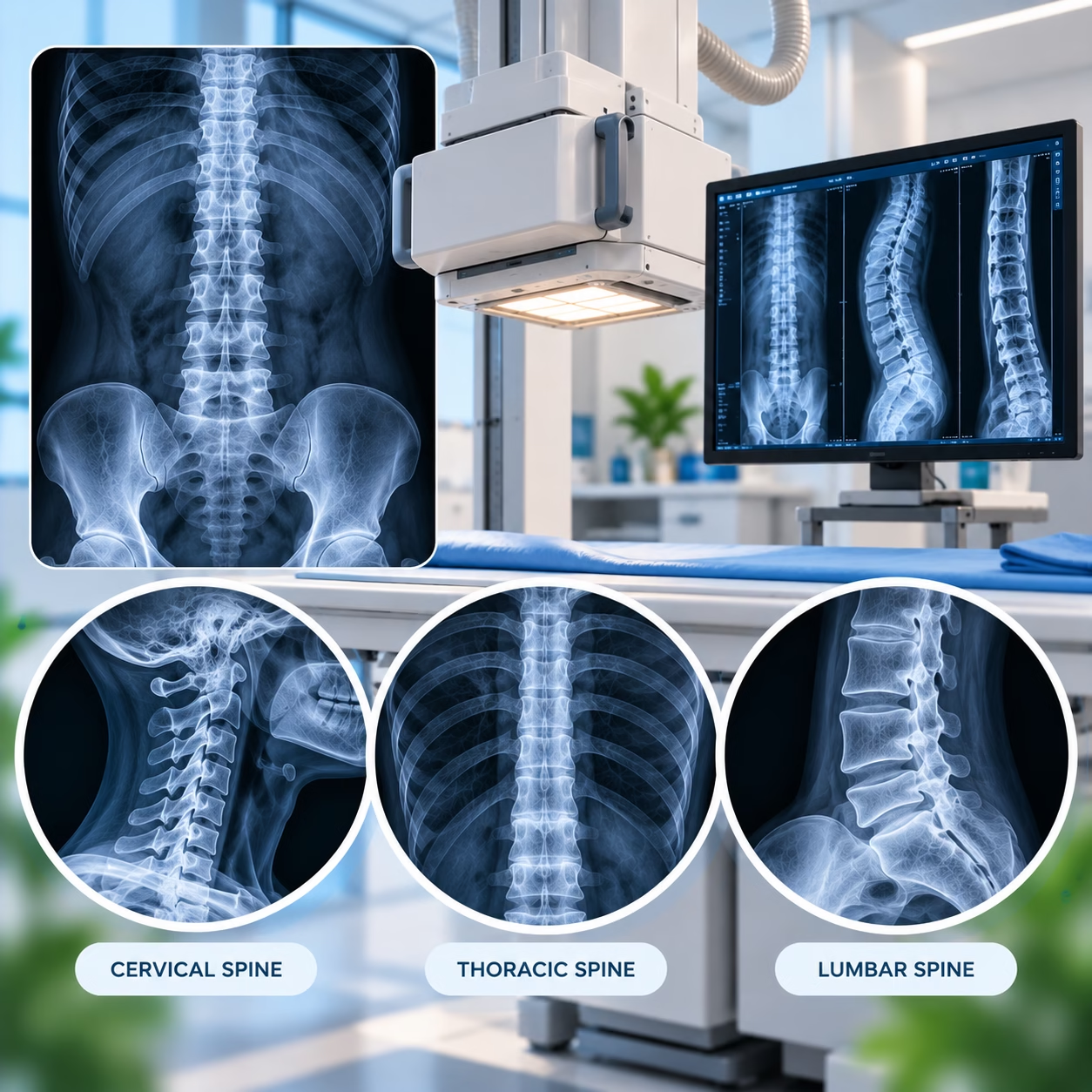
Spine X-Ray
What it is
Detailed imaging of the cervical (neck), thoracic (mid-back), or lumbar (lower back) spine to visualize the vertebral bones and their alignment.
What we assess
Spinal alignment issues (like scoliosis or kyphosis), disc space narrowing indicating degeneration, bone spurs causing nerve compression, and vertebral fractures.
What to expect
Depending on your symptoms, we may take multiple views (front, side, and sometimes bending forward or backward) to evaluate dynamic spinal stability.
Shoulder, Upper Limb, Foot & Ankle X-Ray
What it is
Targeted imaging for the upper extremities (shoulder, elbow, wrist) and the complex, multi-bone structures of the foot and ankle.
What we assess
Dislocations, hairline or stress fractures, calcific tendinitis in the shoulder, and arthritic changes in the small joints of the hands and feet.
What to expect
Careful positioning by our technician to get clear views of overlapping bone structures, ensuring subtle fractures or abnormalities are not missed.
04
Extremities & Small Joints

05
Surgical Follow-up
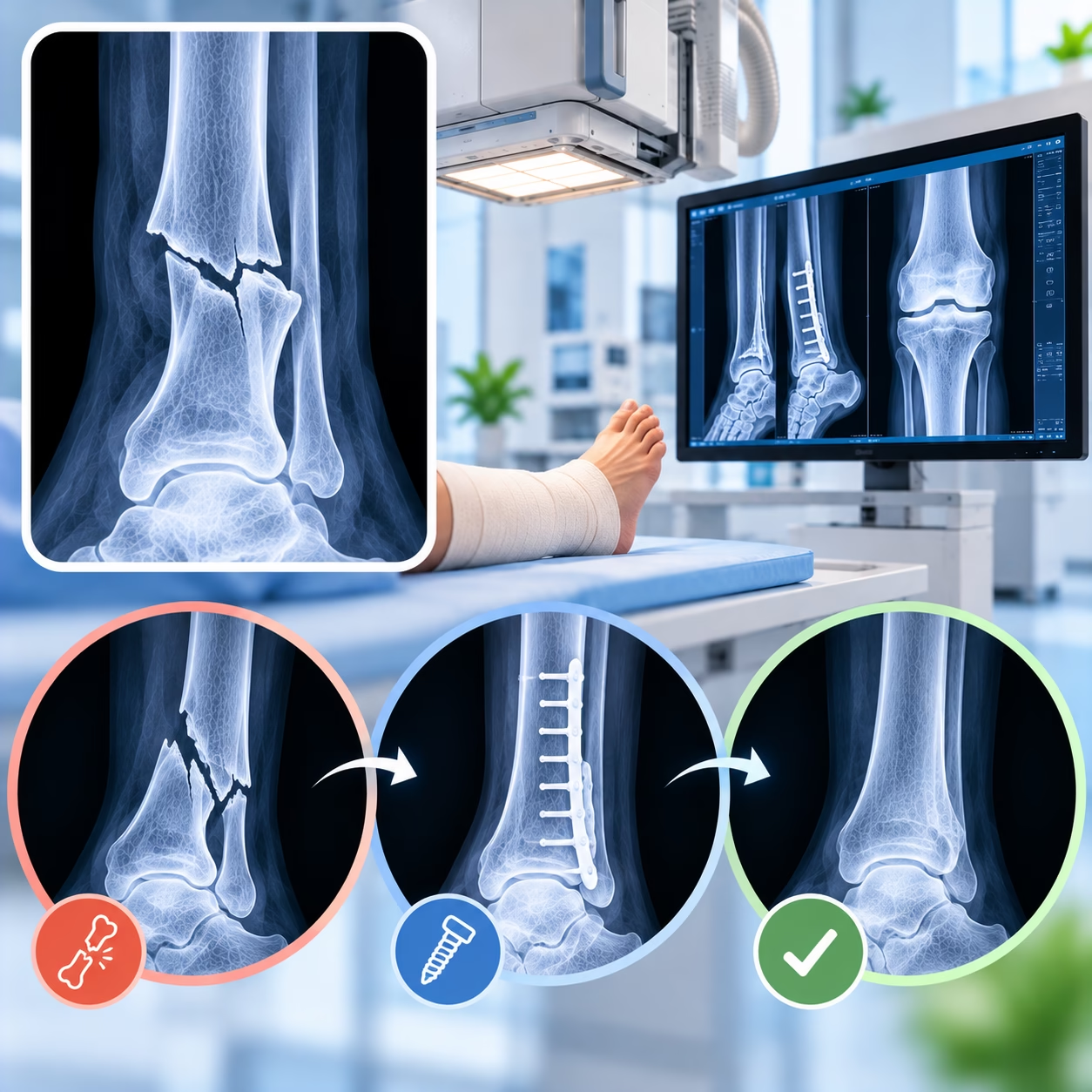
Fracture & Surgical Follow-up X-Ray
What it is
Monitoring images taken during recovery from a break or after a major orthopaedic operation, like a joint replacement or fracture fixation.
What we assess
Callus formation (the natural bone healing process), implant positioning, and the stability of any installed hardware (like plates, screws, or prosthetic joints).
What to expect
Regular interval scans scheduled during your post-operative visits. These X-rays are vital for us to safely clear you to upgrade your rehabilitation and weight-bearing activities.
THE PATH TO DIAGNOSIS
Four stages, clear answers.
Our seamless in-house process ensures you get the answers you need without unnecessary delays or stressful travel.
01
Evaluate
Clinical assessment by our orthopaedic surgeon to determine the precise X-ray views needed for an accurate diagnosis.
02
Image
A quick, comfortable X-ray session within the clinic, guided by our specialized diagnostic technician.
03
Review
Immediate digital review of the high-resolution images on-screen alongside your clinical symptoms for complete transparency.
04
Plan
Formulating a treatment plan right away, whether it involves medication, a plaster cast, or preparing for surgery.
WHY BRAIN & BONE
Because you deserve to be treated as a person, not a diagnosis.
Specialist-Led Consultations
Every visit begins with the specialist who treats your condition.
Personalised Treatment
Plans built around your body, your mind and your life.
Evidence-Based Care
Treatment decisions grounded in clinical judgement, not guesswork.
Confidential Mental Healthcare
A private, respectful space for every conversation.
Clear Communication
Every option explained, in language you understand.
Continuity of Care
Follow-up and recovery support, not a single visit.
MEET YOUR SPECIALIST
Dr. Neeraj Mishra
Orthopaedic & Robotic Joint Replacement Surgeon

ABOUT YOUR DOCTOR
Treatment that starts with understanding the person.
I am an orthopaedic and robotic joint replacement surgeon with a focus on helping patients overcome pain, regain mobility and return to an active, independent life. Orthopaedic treatment, to me, is not simply about treating a bone or a joint — it is about restoring function and helping a person get back to the life they value.
My approach begins with understanding your symptoms, lifestyle and functional limitations, followed by a thorough clinical assessment. I explain the diagnosis and the treatment options clearly, so that you can make an informed decision about your own care. Where appropriate, I prefer to explore non-surgical options first.
With more than ten years of clinical experience, my work includes joint replacement and robotic-assisted joint replacement, with an emphasis on careful planning and appropriate patient selection.
FREQUENTLY ASKED QUESTIONS
Questions patients ask about X-Rays.
Why is a digital X-ray better than a traditional one?
Digital X-rays produce significantly clearer, high-resolution images in seconds and use much lower levels of radiation than traditional film X-rays. They are also immediately available for the doctor to review with you on a computer screen.
Is an X-ray safe?
Yes. Modern digital X-ray machines use very small amounts of radiation, comparable to the natural background radiation you receive from the environment over a few days. However, if you are or might be pregnant, always inform the doctor and technician beforehand.
Do I need an appointment just for an X-ray?
If you are already consulting with our orthopaedic doctor, the X-ray is typically done during your visit. If you have a referral for an X-ray from another doctor, please call ahead to confirm the best time to visit our diagnostic facility in Ghatkopar.
How long does the procedure take?
The imaging process itself takes only a few minutes. Depending on how many views are required (e.g., front, side, or standing), you will be in the X-ray room for about 5 to 10 minutes.
Why do I need to stand for my knee or hip X-ray?
Weight-bearing (standing) X-rays are crucial for assessing conditions like osteoarthritis. They show the true narrowing of the joint space when it is under load, which cannot be seen accurately if you are lying down.
Do I need to prepare for my X-ray?
No special preparation is required. However, you should wear comfortable, loose-fitting clothing. You will be asked to remove any jewelry, belts, or clothing with metal zippers or buttons over the area being imaged, as metal can block the X-rays.
What Our Patients Think
We are committed to improving the health of our patients and their feedback matters the most to us.


Wherever you’re starting from, we’re here to help you move forward.
Whether you are dealing with pain, recovering from an injury, navigating a difficult phase of life, or simply looking for someone to talk to — the first step is reaching out.